Why Can’t I Quit Smoking Even When I Want To? (Oklahoma City Guide)

TLDR Quitting smoking is not just about willpower. Nicotine addiction rewires your brain and creates deep habit loops that drive cravings and automatic behaviors. In Oklahoma, more than 15 % of adults still smoke and the state spends billions on smoking‑related health care and lost productivity. If you’re struggling to quit, you’re facing powerful forces—physiological, psychological, social and environmental.
This guide explains why cigarettes have such a hold, how hypnotherapy and other evidence‑based strategies can help, and what local resources are available in Oklahoma City and Norman. By understanding the science behind addiction, addressing emotional triggers, creating a comprehensive quit plan and building a smoke‑free identity, you can break free and enjoy a healthier life. Even though quitting feels daunting, many Oklahomans succeed each year with the right support and strategies.
What key smoking statistics should you know?
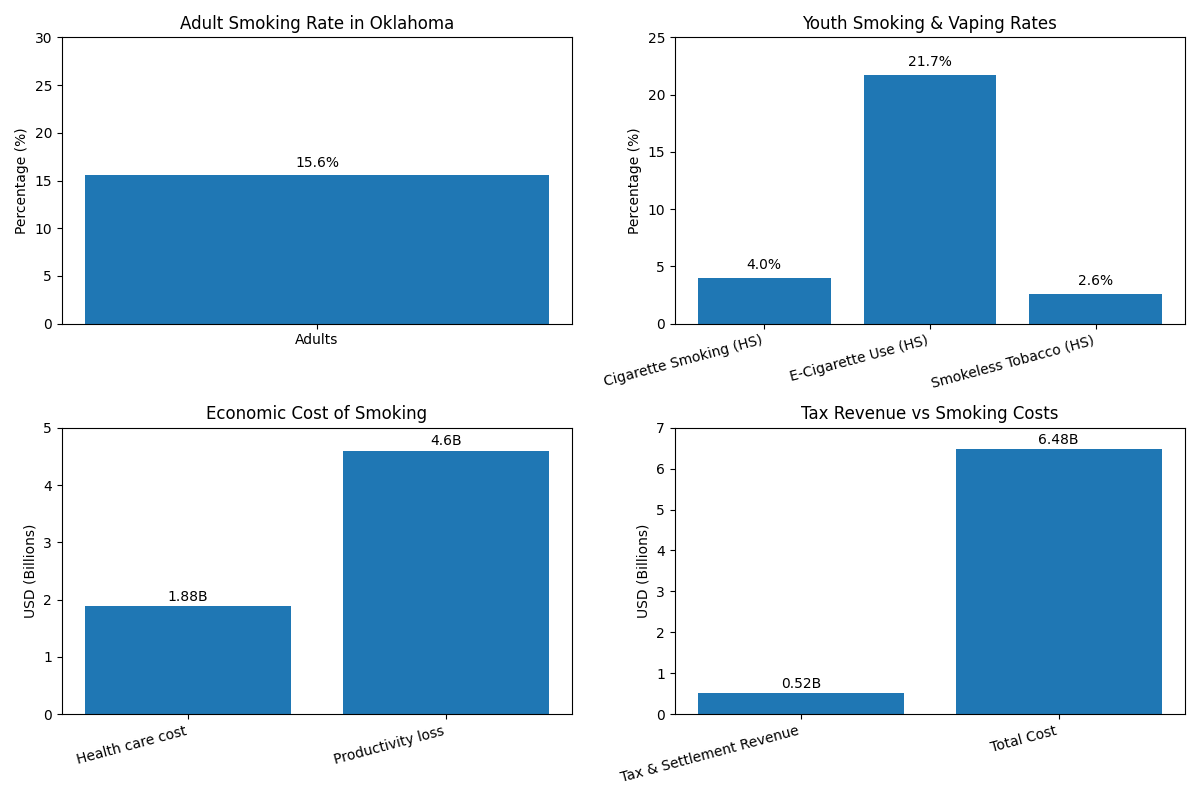
- Adult smoking rate: More than 15 % of adults in Oklahoma still smoke.
- Youth smoking and vaping: About 4 % of high‑school students smoke cigarettes, 21.7 % use e‑cigarettes and 2.6 % use smokeless tobacco.
- Economic cost: Oklahoma spends $1.88 billion every year on smoking‑related health care and loses $4.6 billion in productivity.
- Tax revenue vs. cost: The state collects $523.5 million in tobacco taxes and settlement payments—far less than the total costs of smoking.
Why is quitting smoking so frustrating when you want to quit?
If you are reading this, chances are you have decided to quit smoking—or at least, you desperately want to. You may have thrown away your last pack of cigarettes, told your friends and family your quit date, or tried nicotine patches. You might have downloaded an app or read a book. But after a day, a week or a month, cravings surged and you lit up again. Each failed attempt leaves you feeling weak and frustrated. Many smokers blame themselves: “Why can’t I quit? I have so much willpower in other areas of life.” The answer lies in the complexity of nicotine addiction. Your brain, body, emotions and environment all conspire to keep you smoking. Understanding these factors is the first step toward overcoming them.
For Oklahomans, the challenge is compounded by local context. The adult smoking rate in Oklahoma remains higher than the national average. The state is a tobacco powerhouse with a long history in the industry. Local culture, jobs and social scenes sometimes normalise smoking. In Norman, you might see students outside campus buildings sharing cigarettes; in Oklahoma City, a stressful commute or demanding job can trigger chain smoking. Meanwhile, nearly $1.88 billion is spent on smoking‑related health care each year in Oklahoma and $4.6 billion is lost to productivity. These numbers underscore the urgency of quitting—not just for your own health but for the community’s well‑being.
This article explores why quitting is so hard, focusing on nicotine’s impact on the brain, psychological and emotional dependencies, habit loops and environmental triggers. We’ll examine the myths about quitting and hypnotherapy, share scientific evidence and success stories, and provide step‑by‑step guidance tailored to Oklahoma City and Norman residents. Whether you live downtown near the Bricktown Canal or in a quiet neighbourhood near the University of Oklahoma, you’ll find local resources and strategies to help. We’ll also provide internal links to related articles and services on our site, so you can dig deeper into specific questions like “How many hypnosis sessions will I need?” or “Is virtual hypnotherapy more effective?”. By the end of this guide, you will not only understand why quitting is difficult but also how to overcome those barriers—one day at a time.

What is the science of nicotine addiction and habit loops?
How does nicotine hijack your brain?
Nicotine is one of the most addictive substances known. When you inhale smoke, nicotine enters the bloodstream through the lungs and reaches your brain within seconds. There, it binds to nicotinic acetylcholine receptors, causing a release of neurotransmitters, most notably dopamine, which produces feelings of pleasure and relaxation. Over time your brain comes to expect these dopamine surges. Without nicotine, dopamine levels drop and you feel irritable, anxious and unable to focus. These withdrawal symptoms are powerful drivers of continued smoking.
Nicotine also changes the structure of your brain. Chronic smoking increases the number of nicotine receptors, so your brain craves more nicotine to achieve the same effect. This process—called up‑regulation—makes it harder to quit because reducing your intake leaves many receptors unfilled. Nicotine also triggers the release of glutamate, which creates memories linking smoking to certain contexts, and GABA, which dampens anxiety and stress. The combination of increased dopamine and these other neurotransmitters reinforces the habit. When you smoke after meals, during stressful meetings or while driving, your brain registers these situations as cues and prompts you to light up again. How does hypnotherapy really work for quitting smoking and trying to quit nicotine? Come learn more about it here: hypnosis-research-for-nicotine-addiction.
What are habit loops and why are cues so powerful?
Habits operate through a loop: cue → routine → reward. For smokers, cues include obvious triggers like drinking alcohol or being around other smokers, but they also include subtle stimuli like the smell of coffee, certain songs, or times of day. The routine is lighting a cigarette; the reward is relief from cravings and a rush of dopamine. This loop becomes automatic. You might not even consciously decide to smoke; your hand moves, your lighter flicks, your lungs inhale, and you only realize it after the first drag.
Breaking a habit loop requires more than removing the reward. You must identify cues and replace the routine with another behavior that delivers a similar reward. That’s why simply throwing away cigarettes seldom works—it leaves the cue unresolved and the reward unmet. Behavioral therapies like cognitive behavioral therapy (CBT) teach you to recognize cues and plan alternative actions. Hypnotherapy goes a step further by rewiring your subconscious responses to cues, making cigarettes less attractive and new habits more natural.
Why is quitting harder in Oklahoma?
The environment in which you live plays a huge role in whether you smoke and whether you can stop. In Oklahoma, cigarette taxes are relatively high, and there are restrictions on smoking in many public places. Yet smoking remains prevalent. One reason is economic: many jobs in the state involve long hours, physical labor or high stress, such as oil and gas, health care, education and agriculture. Smoking provides a quick break and social bonding among colleagues. Another reason is cultural: rural areas and certain demographics view smoking as a part of social identity. Among high school students, 4 % still smoke cigarettes and 21.7 % use e‑cigarettes. These numbers show that tobacco use remains a rite of passage for some young people.
Then there’s the issue of access and advertising. While tobacco marketing has been restricted, convenience stores still display cigarettes prominently. Many small towns around Norman and OKC have few smoke‑free social spaces, making cigarettes a default activity. Thus, quitting in Oklahoma means not only fighting your brain but also navigating an environment that still caters to smokers.
What are the key takeaways about nicotine and habit loops?
- Fast brain delivery – Nicotine reaches your brain within seconds, binding to receptors and releasing dopamine that reinforces the smoking habit.
- Up‑regulated receptors – Chronic smoking increases the number of nicotine receptors, so your brain craves more nicotine to feel normal.
- Powerful cues – Habit loops follow a cue → routine → reward pattern; cues can be physical (coffee, alcohol), emotional (stress, boredom) or environmental (driving, social settings).
- Loop replacement – Breaking the loop isn’t about willpower; it’s about replacing the routine with a healthier behavior that satisfies the same need, like deep breathing, walking or stretching.
- Local stressors – High‑stress jobs, economic uncertainty and cultural norms in Oklahoma can strengthen these habit loops and make quitting more challenging.

How do emotional dependencies and psychological barriers affect quitting smoking?
How does smoking act as a coping mechanism?
Beyond physical addiction, cigarettes serve as psychological crutches. Many smokers use them to manage stress, anger, boredom, sadness and social anxiety. Lighting a cigarette can provide a moment of pause and a ritualistic way to gather your thoughts. When you quit, you don’t just remove nicotine; you remove a coping tool. The feelings that cigarettes suppressed or distracted you from come rushing back. Without a replacement, these emotions can be overwhelming, leading to relapse.
Stress is a significant trigger. According to surveys, more than half of Oklahoma smokers attempt to quit each year, but high stress at work or home often derails these attempts. Teachers managing large classes, nurses working night shifts, or parents juggling multiple jobs may find that smoking feels like the only break they get.
Hypnotherapy helps by training your mind to associate stress relief with healthier practices like deep breathing, stretching or mindfulness. During sessions, you learn how to dissociate cigarettes from relaxation, replacing them with calming visualisations and mantras.
How do identity, self-esteem and social connections influence quitting?
For long‑term smokers, cigarettes become part of self‑identity. They might remember learning to smoke from friends in high school or bonding with colleagues over smoke breaks. Social smoking can be a way to network, fit in or rebel. When you quit, you risk feeling isolated from your smoking friends. You may worry about losing part of who you are. Hypnotherapy helps you visualise yourself as a confident non‑smoker, reinforcing a new identity that still feels authentic. You learn to reframe social interactions: instead of stepping outside for a smoke, you might invite coworkers for a walk or a quick coffee.
Self‑esteem also plays a role. Repeated attempts to quit followed by relapse can lead to shame and guilt. Each failure chips away at your confidence and strengthens the inner critic that says, “You can’t do this.” Hypnotherapy addresses this by introducing positive suggestions that counter self‑criticism. Practitioners often use language like, “You are capable of change” and “You deserve to be healthy.” Over time, these affirmations sink into your subconscious, increasing your resilience when cravings strike.
What myths and misconceptions exist about hypnosis?
Many smokers are curious about hypnotherapy but skeptical. Hollywood often portrays hypnosis as mind control—clients put into trances and made to bark like dogs or forget their names. In reality, therapeutic hypnosis is a cooperative process. You remain aware and in control. Hypnosis simply helps you access a relaxed state where your mind is more open to suggestion. You cannot be forced to act against your values or give up secrets.
Another myth is that hypnosis either works perfectly or not at all. In truth, hypnotherapy is like any behavioral intervention: its effectiveness depends on the skill of the practitioner, the rapport between you and the therapist, and your willingness to participate. Research shows that hypnosis can significantly increase quit rates, but it works best when combined with other strategies and when you actively reinforce its suggestions.
| Frequency | Annual Cigarette Cost |
|---|---|
| 1/2 pack / day | $1793.98 |
| 1 pack / day | $3587.95 |
| 2 pack / day | $7175.90 |
What are the financial and health costs of smoking? How much does smoking cost you personally?
Smoking is expensive. In Oklahoma, a pack of cigarettes costs around $7 to $8 depending on taxes and brand. Smoking one pack a day costs about $2 500 per year. Over ten years, that’s $25 000—enough for a down payment on a house or a new car.
Even if you smoke half a pack, the numbers add up. Additionally, smokers pay higher health insurance premiums and often incur more medical expenses. Many also lose income due to smoking breaks or sick days. When you quit, you free up significant money to invest in things that improve your quality of life: gym memberships, healthy food, travel or education.
What is the statewide economic impact of smoking?
Smoking’s toll extends beyond individuals. In 2023, Oklahoma collected $523.5 million from tobacco taxes and settlement payments. However, the state still spends $1.88 billion per year on smoking‑related health care and loses $4.6 billion in productivity. These figures show that tobacco use drains resources that could go toward schools, infrastructure and public health initiatives. Quitting is a personal act with collective benefits: as smoking rates decline, health care costs decrease and productivity rises. This creates a healthier and wealthier community for everyone in Oklahoma City, Norman and beyond.
What are the health risks and long-term consequences of smoking?
Most smokers know cigarettes cause lung cancer and heart disease, but the list of health risks is long. Smoking damages nearly every organ system: it increases the risk of chronic obstructive pulmonary disease (COPD), stroke, diabetes, emphysema, and reproductive problems. Women who smoke face higher risks of infertility and premature birth. Men may experience erectile dysfunction. Smoking also accelerates skin aging and tooth loss. Meanwhile, the risk of second‑hand smoke for family members and pets adds another layer of concern.
Quitting dramatically reduces these risks. Within 20 minutes of your last cigarette, heart rate and blood pressure drop. Within 12 hours, carbon monoxide levels in your blood normalise. Within a year, your risk of heart disease is half that of a smoker. Within 5 to 10 years, your risk of stroke matches that of a non‑smoker. These milestones provide motivation to keep going when cravings hit.
How are youth affected by nicotine products?
Smoking is not just an adult problem. High school smoking rates may be declining, but youth vaping is surging. In 2021, 21.7 % of Oklahoma high school students used e‑cigarettes and 2.6 % used chewing tobacco, snuff or dip. Nicotine exposure during adolescence harms brain development and increases the likelihood of becoming addicted to cigarettes later in life.
Tackling youth smoking and vaping requires community engagement: parents, schools, health providers and policymakers must work together. Quitting as an adult sets a powerful example for young people.

How much money and productivity does smoking drain?
- Personal cost – A pack‑a‑day habit can cost up to $2 500 per year at $6.75 per pack. Over ten years, that’s $25, 000 that could pay for a family vacation, continuing education or a home renovation.
- Health care burden – Tobacco use costs Oklahoma $1.88 billion in health care each year.
- Productivity loss – The state loses an estimated $4.6 billion in productivity annually due to smoking‑related illness and premature death.
- Tax revenue vs. cost – Oklahoma collects about $523.5 million in tobacco taxes and settlement payments—far less than the total costs of smoking.
- Opportunity cost – Money spent on cigarettes could fund hobbies, travel, education or savings; quitting frees up resources for a better quality of life.
What are the evidence-based approaches to quitting smoking and what role do nicotine replacement therapies and medications play in quitting?
Nicotine replacement therapy (NRT) delivers controlled doses of nicotine through patches, gums, lozenges, inhalers or nasal sprays. It eases withdrawal symptoms and cravings by slowly weaning your body off nicotine. Studies show that NRT can double your chances of quitting compared to going cold turkey.
However, NRT does not address behavioural triggers, so it is most effective when paired with behavioural support like counselling or hypnosis. Prescription medications like bupropion (Zyban) and varenicline (Chantix) also help by reducing cravings and blocking nicotine’s rewarding effects. These medications may be particularly useful for heavy smokers or those with co‑occurring depression or anxiety. Always consult a doctor before starting any medication.
How do Cognitive Behavioral Therapy (CBT) and counselling help you quit smoking?
CBT is a psychological approach that helps you identify and change unhelpful thoughts and behaviours. For smoking cessation, CBT teaches you to recognise triggers, develop coping skills, manage stress and challenge beliefs like “I can’t function without a cigarette.” Counselling sessions provide accountability and emotional support. Many smokers benefit from combining CBT or counselling with NRT or hypnotherapy.
In Oklahoma, the state quit line invests significantly more per smoker than the national median, reflecting a commitment to behavioural support. If you prefer group support, local programs like Nicotine Anonymous or community cessation classes offer a sense of camaraderie and shared experience.
How does hypnotherapy access the subconscious to help you quit smoking?
Hypnotherapy works by guiding you into a relaxed yet alert mental state. In this state, your subconscious becomes more receptive to suggestions. A trained hypnotherapist helps you dismantle the belief that smoking relieves stress and replaces it with healthier associations.
Research suggests hypnotherapy can be more effective than nicotine replacement therapy alone. For example, one study found that 36.6 % of hypnotherapy participants remained smoke‑free at 26 weeks compared to 18 % of those using NRT. Hypnosis also complements other methods: combining hypnosis with NRT or medication addresses both physical and behavioural aspects of addiction.
In our practice, clients typically require two to four sessions to quit smoking. The first session focuses on identifying triggers and introducing suggestions. The second session reinforces these suggestions and addresses new triggers. Some clients return for third or fourth sessions to solidify their non‑smoker identity and prepare for high‑risk situations like holidays or stressful deadlines. Our sessions are available virtually enabling you to stay home, or remain wherever you feel most comfortable.
Why is combining approaches often the best strategy for quitting?
There is no single “best” way to quit. Evidence suggests that combining methods yields the highest success rates. You might use a nicotine patch to manage physical withdrawal while attending hypnotherapy sessions to tackle subconscious patterns. You could add counselling to address emotional triggers or join a support group for accountability.
The Oklahoma Tobacco Helpline provides free coaching and eight weeks of NRT; pairing this with hypnotherapy and lifestyle changes increases your chances of success. The key is to personalise your quit plan based on your smoking history, triggers, personality and support system.

What happens during the hypnotherapy process in detail?
Your hypnotherapy journey begins with a thorough consultation. The therapist will ask about your smoking history, the number of cigarettes per day, when you smoke, your reasons for quitting and past quit attempts. They’ll also ask about your lifestyle: Do you drink coffee? When are you most stressed? Do you vape or chew tobacco? This personalised assessment is crucial because each smoker’s triggers and beliefs are unique. For example, a young professional in downtown OKC might smoke to cope with traffic stress, while a student in Norman might smoke during late‑night study sessions.
During the consultation, you’ll discuss your goals beyond quitting. Do you want more energy to play with your children? Are you training for a 5 K on the River Trail? Visualising these goals helps build motivation and gives your brain a compelling reason to change.
What happens during induction and deepening in hypnotherapy?
The actual hypnosis session begins with an induction: a series of instructions that guide you to relax your body and focus your mind. This might involve breathing deeply, counting backwards or imagining a peaceful place like the shores of Lake Thunderbird.
As your conscious mind relaxes, the hypnotherapist uses deepening techniques—progressively counting, repeating phrases or visual cues—to help you reach a state of heightened awareness where your subconscious is more accessible.
How do suggestion and visualization work in hypnotherapy?
Once in a receptive state, the hypnotherapist introduces positive suggestions tailored to your triggers and goals. For example, if you smoke when stressed, they might suggest that deep breathing instantly calms you and satisfies your need for relief. If you smoke during morning coffee, they might reinforce that the smell and taste of coffee now signal a sense of pride in being a non‑smoker. Visualizations help embed these suggestions: you might picture yourself at OU football games enjoying the energy without feeling the urge to smoke, or strolling through the Oklahoma City Farmers Market breathing fresh air.
What are post-hypnotic anchors and homework tasks?
To sustain change after the session, the therapist may assign homework such as listening to a self‑hypnosis recording or practicing anchors—small physical actions like pressing your thumb and finger together while thinking a calm word. These anchors trigger the relaxation response during cravings. You might be asked to keep a journal to track triggers, progress and feelings. Reflecting on your journey keeps you accountable and reveals patterns you might not otherwise notice.
How does virtual hypnotherapy compare to in-person sessions?
Many clients ask whether virtual sessions are as effective as in‑person sessions. In our practice, we’ve found that virtual sessions often produce deeper trances because clients are in familiar surroundings. During the COVID‑19 pandemic, we shifted entirely to virtual sessions for safety and never looked back. Client feedback was overwhelmingly positive: they felt more relaxed, could attend sessions without travel stress and appreciated the flexibility. Some prefer in‑person sessions for the face‑to‑face connection; both options are available. The key is choosing the format where you feel most comfortable and capable of focusing.
What are quick facts about hypnotherapy success and session counts?
- Typical program length – Most smokers quit within 2–4 sessions, each lasting about 60–90 minutes. The first session focuses on identifying triggers and introducing suggestions; subsequent sessions reinforce new habits and address emerging triggers.
- Success rate vs. other methods – Randomized trials have found that smokers receiving hypnotherapy are more than twice as likely to remain smoke‑free at 26 weeks compared with those using nicotine replacement therapy alone. Combining hypnotherapy with NRT or counseling can further boost success rates.
- Best when combined – Evidence suggests that hypnotherapy works best as part of a comprehensive quit plan. Clients who pair hypnosis with nicotine patches, medications or coaching often report higher confidence and lower relapse rates.
- Local outcomes – Our practice in Oklahoma City and Norman regularly sees clients become smoke‑free after just a handful of sessions. Many continue practicing self‑hypnosis at home to maintain a non‑smoker identity.

What practical strategies can support your quit journey? How can you build a strong support network to quit smoking?
Quitting smoking is easier with support. Tell family, friends and co‑workers about your plan so they can encourage you and avoid smoking around you. Join a support group—online or in person. Nicotine Anonymous meetings are held throughout Oklahoma City and Norman. Social media groups and forums like r/stopsmoking on Reddit provide 24/7 connection with others who understand what you’re going through. Regular check‑ins with a coach or therapist keep you accountable and motivated.
How do you replace smoking rituals with healthier habits?
Identify what you enjoy about smoking and replicate it in healthier ways. If you like the oral fixation of smoking, chew sugar‑free gum or carry cut vegetables like carrot sticks. If you smoke to take breaks, set a timer to stretch or take a short walk outside. If smoking after dinner is habitual, end your meal with herbal tea or brushing your teeth to signal the meal is over. These small changes gradually weaken the association between certain activities and smoking.
How can you manage stress and emotions while quitting smoking?
Stress is a leading cause of relapse. Develop a toolkit of stress‑reduction techniques: deep breathing exercises, progressive muscle relaxation, mindfulness meditation, yoga, tai chi or journalling. Use mobile apps like Insight Timer or Headspace for guided meditations. If you feel overwhelmed, reach out to a support person instead of smoking. Regular exercise also decreases stress and improves mood. Try walking along the Myriad Botanical Gardens paths or hiking at Sutton Wilderness Park.
How does staying busy and engaged help you quit smoking?
Boredom can trigger smoking. Fill your time with activities that keep your hands and mind occupied. Start a hobby: knitting, woodworking, playing guitar, painting. Take up volunteer work or join a local community class. Sign up for sports leagues—softball, basketball or pickleball—through OKC Parks and Recreation or Norman’s recreational program. The sense of accomplishment and social connection reduces cravings.
How can you prepare for high-risk situations to avoid relapse?
Some scenarios are particularly challenging: concerts, parties, bar nights, family gatherings. Plan ahead for these. Bring mints, gum or a small object to fiddle with. If you drink alcohol, limit your intake because alcohol lowers inhibitions. Attend events with a supportive friend who knows you’re quitting. Avoid smoky environments until you feel confident. Role‑play responses to offers of cigarettes or remarks like, “One won’t hurt.” In hypnosis sessions, you can rehearse these situations in your mind, making it easier to handle them in real life.
Why is it important to celebrate milestones and reward yourself?
Acknowledging progress boosts motivation. Mark milestones—24 hours, 3 days, 1 week, 1 month, 6 months—and celebrate them with non‑food rewards: buy a new book, go to a movie, schedule a massage or save up for a weekend getaway. Each celebration reinforces your new identity as a non‑smoker.
What are the top tips to stay smoke‑free?
- Tell someone – Share your quit date and progress with a friend, family member or support group. Accountability keeps you on track and invites encouragement.
- Change routines – Pair your morning coffee with deep breathing or stretching instead of cigarettes. Replace smoke breaks with short walks, meditation or a quick chat with a colleague.
- Move your body – Exercise releases endorphins and reduces cravings. Activities like walking the River Trail, cycling in Norman or attending a yoga class can improve mood and distract from urges.
- Prepare for triggers – Keep gum, mints, water or a fidget object in your bag or car. If you know certain situations (traffic, after meals) provoke cravings, plan alternative actions ahead of time.
- Stay positive – Quitting is a journey. Celebrate small wins, practise self‑compassion and learn from slips rather than judging yourself. Each smoke‑free day builds momentum.

What local resources and success stories can help you quit smoking?
What does the Oklahoma Tobacco Helpline offer and what quit programs are available?
The Oklahoma Tobacco Helpline (1‑800‑QUIT-NOW) offers free coaching, personalized quit plans, and eight weeks of nicotine replacement therapy. Coaches provide tips on managing stress and identifying triggers. They can refer you to local resources and track your progress over weeks or months. The helpline is available 24/7, ensuring support during late‑night cravings.
What services does Quit Smoking OKC Hypnotherapy provide?
Our practice offers both virtual and in‑person sessions in Oklahoma City and Norman. We are certified through the Master Hypnotist Society and have helped hundreds of Oklahomans quit smoking, vaping, smokeless tobacco and nicotine pouches. Our approach combines hypnotherapy with cognitive coaching, lifestyle guidance and accountability. We offer free consultations to evaluate your needs and create a personalised plan. After the initial sessions, we provide follow‑ups and booster sessions to prevent relapse.
What programs do Norman Regional and local health departments offer?
Norman Regional Health System offers smoking cessation classes and support groups. The Oklahoma City‑County Health Department runs the “Step Up Stop Smoking” program, which includes counselling, support groups and nicotine replacement. Local pharmacies often host smoking cessation clinics as well. Contact your doctor for referrals to these services.
How can support groups and community engagement help you quit smoking?
Many churches, workplaces and community centers host support groups. Check with local hospitals, YMCAs and wellness centres for meeting schedules. Online communities offer anonymity and 24‑hour access; these are especially helpful for night‑shift workers. For younger smokers, university counselling services at the University of Oklahoma and Oklahoma City University provide free or low‑cost quitting support.
What are the key local resources to remember?
- Oklahoma Tobacco Helpline (1‑800‑QUIT‑NOW) – This statewide service offers free coaching, personalised quit plans and up to eight weeks of nicotine replacement therapy.
- Quit Smoking OKC Hypnotherapy – Our clinic provides virtual and in‑person hypnotherapy sessions, cognitive coaching and booster sessions to help you stay smoke‑free.
- Norman Regional Health System – The hospital system offers smoking cessation classes and support groups to help residents quit.
- Oklahoma City‑County Health Department – Their Step Up Stop Smoking program includes counselling, support groups and nicotine replacement.
- University counselling services – The University of Oklahoma and Oklahoma City University provide free or low‑cost support to students who want to quit.
- Nicotine Anonymous and community groups – Local NicA meetings, church groups and online forums offer peer support and accountability.
What success stories from Norman and Oklahoma City inspire quitting?
Kara from Norman started smoking at 15 and tried to quit six times. She felt ashamed every time she relapsed. After hearing about hypnotherapy on a podcast, she booked a session. In her first session, she discovered that boredom and loneliness at night triggered her smoking. Her therapist guided her through visualising herself reading novels instead of smoking and associating nighttime with relaxation. After four sessions and daily journalling, Kara quit. She’s now smoke‑free for two years, leads a book club and loves hiking in the Wichita Mountains.
Brian from Oklahoma City smoked two packs a day for 25 years. He used patches and gum, but cravings persisted. He attended group hypnosis sessions, downloaded a self‑hypnosis recording and combined it with nicotine lozenges. Brian also joined a local gym and signed up for a 5 K run. He was smoke‑free after three weeks. He still attends monthly support meetings and volunteers at a local tobacco cessation program.
Maria from Moore worked night shifts at a hospital. Smoking gave her short breaks during stressful nights. She worried about quitting because she feared she would snap at patients and colleagues. Through hypnotherapy, she learned breathing techniques to calm her nerves. She also used a weighted blanket during overnight breaks. After three sessions, her cravings diminished. She has been smoke‑free for eight months and now mentors new nurses on self‑care.
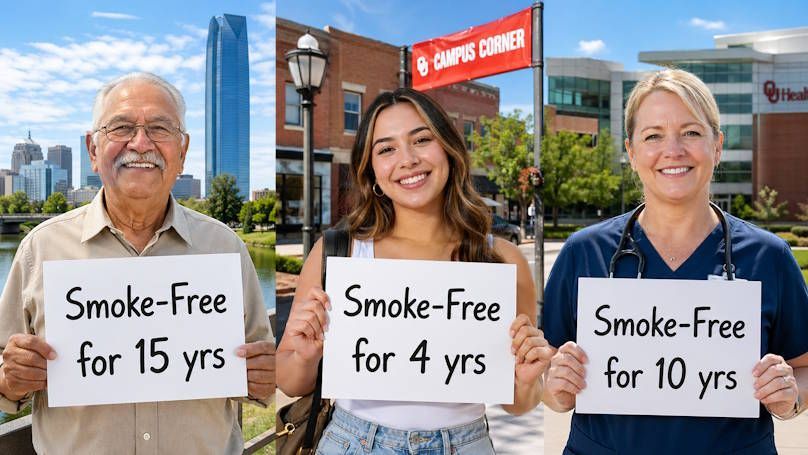
How can you build a smoke-free identity? How do you visualize your smoke-free future?
Quitting smoking is not just about stopping a behavior; it’s about reinventing yourself. Picture your future as a non‑smoker: clearer skin, brighter teeth, a stronger heart and lungs. Imagine waking up without coughing, climbing stairs without wheezing, tasting food more vividly and smelling Oklahoma wildflowers without the dulled senses caused by smoke.
Visualize yourself running along the Oklahoma River, laughing with friends at Scissortail Park, or blowing bubbles with your children without running out of breath. These images create emotional motivation.
How do you create new routines after quitting smoking?
Replace smoking with routines that serve the same psychological purpose: taking breaks, celebrating, coping with stress. Make your morning coffee ritual about mindfulness: smell the coffee, feel the warmth of the mug, watch the steam swirl. After meals, take a quick walk. When you feel anxious, practice a breathing exercise or stretch. Celebrate small victories by calling a friend, listening to your favorite song, or doodling in a journal. Over time, these new routines become your default responses.
Why should you declare your non-smoker status?
Share your smoke‑free identity with the world. Tell people you used to smoke, but you’ve quit. Post milestones on social media. Celebrating publicly increases accountability and encourages others to support you. Some people wear bracelets or pins to remind themselves of their quit journey. Others keep a jar where they deposit the money they would have spent on cigarettes. Watching the money accumulate is both rewarding and motivating.
How do you deal with relapse?
Relapse happens. It doesn’t mean you’ve failed; it means you need to adjust your plan. Identify what triggered the slip: stress, social pressure, emotional turmoil. Revisit your strategies and reinforce them. Schedule an extra hypnotherapy session or support group meeting. Practice self‑compassion. Many successful quitters have relapsed before their final quit. Each relapse taught them something. Use it as a learning opportunity, not a reason to give up.

What steps should you take next to quit smoking?
Quitting smoking may be the hardest thing you ever do—and the most rewarding. Understanding the physiological, psychological and environmental barriers equips you to overcome them. Combining evidence‑based methods like hypnotherapy, nicotine replacement, counselling and lifestyle changes provides the best chance of success. Building a supportive network and a smoke‑free identity ensures you remain tobacco‑free long term.
Remember, each day without a cigarette is a victory for your health, your family and your community.
If you’re ready to take the next step: Give Quit Smoking OKC Hypnotherapy a call today @ 405-703-6572 or take 30 seconds and fill out the following form to request a call-back so they can connect with you to help you!
Quit Smoking OKC Blog